Define the storage task and door orientation
- Will crews load by hand, pallet jack, or forklift?
- Does the door face an active aisle or an outdoor lane that shifts with weather?
- Are contents sensitive to moisture or salt exposure?
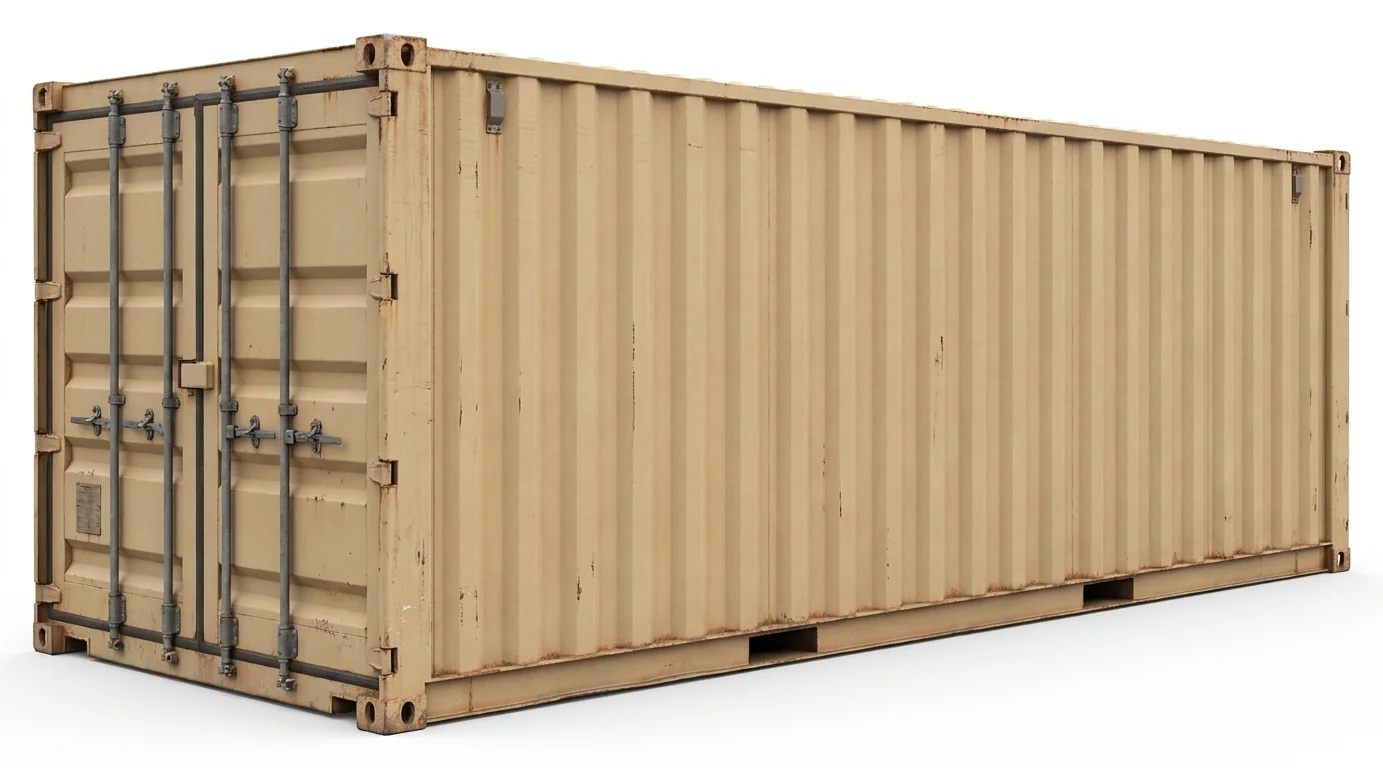
In local distribution buildings, containers used as flex storage often need tight aisle alignment and low thresholds. At industrial sites with sandy pads, door orientation relative to compacted ground helps avoid settling that can skew frames and bind doors.
Route, pad, and set-down constraints
- Measure the narrowest gate, turn radius, and overhead clearance from street to set-down.
- Confirm ground bearing: sandy soils may require a firmer base for loaded containers.
- Check for utilities, drains, and low areas that hold water during seasonal storms.
For mixed projects that also run forklifts or telehandlers, keep container placement clear of lift swing and staging so material flow is not pinched during peak hours.
Interior use in high-bay or hangar spaces
When containers sit indoors as tool cribs, verify height against overhead systems and the path used by electric scissor lifts or vertical masts. Note if doors need to open fully without encroaching on lift lanes.
Moisture and corrosion considerations
The regional climate can drive condensation inside metal containers. Sensitive parts, electronics, and textiles may need ventilation strategies and frequent checks on door seals. Outdoor units near salt exposure benefit from periodic inspection around hinges and lock boxes.
Duration and access frequency
Short-term event setups favor easy truck access and simple set-down. Multi-month build-outs require thought about how shifting traffic patterns, temporary fencing, and storm responses might block container doors or retrieval routes.