Ground and task define the category
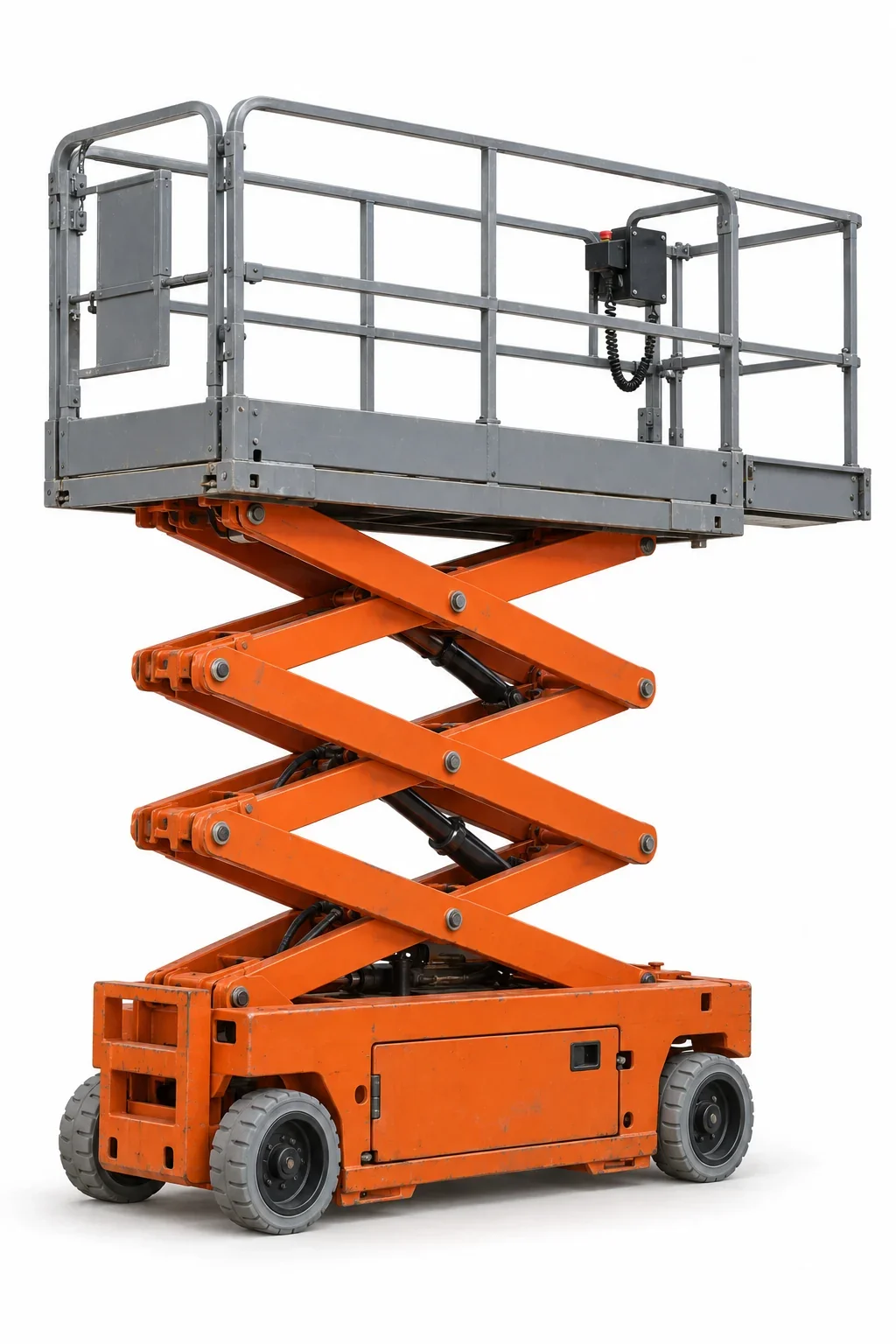
- If the machine can sit directly beneath the work and the site is uneven, a rough-terrain scissor provides vertical access with a stable, wide platform.
- Measure required platform height from the ground surface you will actually occupy, accounting for grade changes across the work zone.
Local terrain considerations
- Sandy soil benefits from flotation-oriented tires and wider stances that distribute weight.
- Salt-laden air and humidity call for attentive inspections on extended projects, particularly for exposed electrical connections and structural components.
- Storm patterns can shift work indoors; consider pairing with an electric unit for interior tasks when weather interrupts exterior progress. See /electric-scissor-lift-rental/.
Size and footprint planning
- Platform height vs. maximum site height: confirm clearance beneath eaves, canopies, or overhangs at industrial sites.
- Machine width and length: verify access through temporary gates, laydown lanes, and perimeter routes.
- Weight and ground bearing: soft subgrades may require attention to how load spreads across the surface.
When a boom is the better geometry
If the work is set back behind obstacles, a scissor’s vertical path may not reach. Up-and-over access from a boom lift often solves that challenge. Compare at /aerial-lift-rental/ or /boom-lift-rental/.
Common Melbourne use cases
- Exterior cladding, conduit, and glazing on new industrial corridors.
- Canopy and signage work along sandy or uneven perimeters.
- Site lighting and utilities where the lift must traverse mixed surfaces.