Match lift types to task geometry
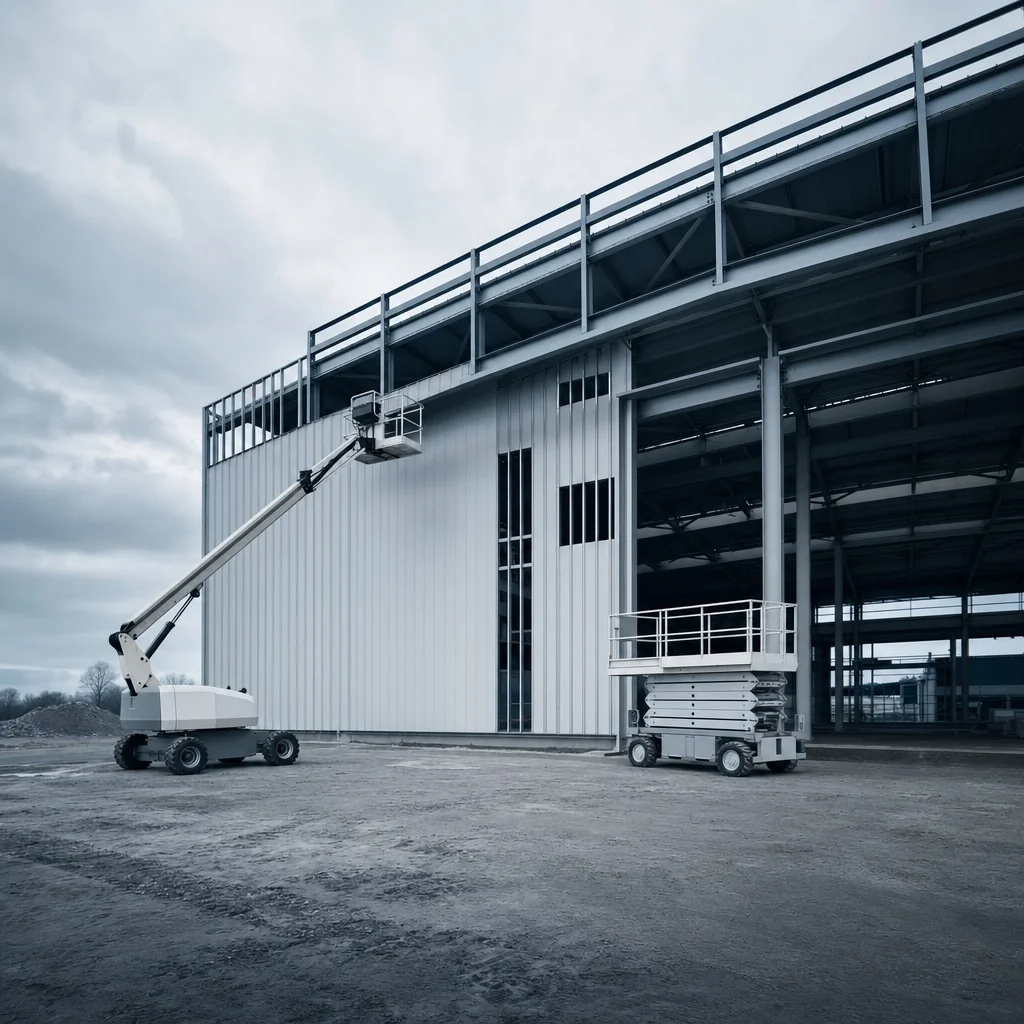
- Straight-up indoor work with narrow aisles leans toward electric scissor lifts.
- Obstructed overhead paths call for articulating boom lifts.
- Long, direct reaches across setbacks favor telescopic boom lifts.
- Compact vertical access in tight service bays may fit vertical mast lifts.
For uneven outdoor approaches or sandy laydown, rough-terrain scissor lifts provide platform capacity with stabilized stance. Material staging and elevated placement pair with telehandlers and forklifts depending on pallet size, turning space, and lift height.
Route, surface, and environment in Melbourne, FL
Document the narrowest doorway, slope, and turning radius along the path. Sandy ground near industrial sites can bog smaller tires, while coastal air accelerates corrosion on exposed equipment during longer runs. When storms roll in, many teams shift to indoor electric solutions to hold schedule.
Site products that support aerial work
- Generators and light towers: power and visibility for dusk or weather-delayed shifts.
- Storage containers: tool and part security positioned clear of lift lanes.
- Temporary fencing and barricades: defines equipment corridors and pedestrian routes.
Coordinating these with lift choices reduces conflicts. For example, light towers placed outside a hangar may need throw distance that clears doors without blinding scissor lift operators inside.
Planning checkpoints
- Height and reach with obstructions noted.
- Ground bearing and tire needs on sand or mixed surfaces.
- Power and lighting for early starts and weather shifts.
- Storage and perimeter lines that won’t pinch equipment movement.
For help aligning categories to your site plan in Melbourne, FL, review the detailed pages linked here or get in touch through /contact/.